

How to visit Paris on foot ? Our best walking itineraries
Paris is best explored on foot. Between its neighbourhoods, each with its own distinct atmosphere, its light-filled riverbanks, its breathing green parks, and its streets where history is written across the façades, the city naturally invites you to wander. Whether you’re drawn to romantic strolls, characterful backstreets or more classic walking routes, walking through Paris offers a different way to experience the city: at your own pace, taking the time to look up, pause, and deliberately get lost.
In this article, you’ll find our selection of neighbourhoods best explored on foot in Paris, along with must-see walking itineraries in Paris for discovering the city at a relaxed pace. You’ll also find guidance on the best times of year to enjoy its parks and promenades in Paris, from luminous spring in Paris to a magical winter atmosphere in Paris. The choice is yours: let your journey through Paris unfold and allow the city to surprise you step by step.
Which neighbourhoods should you prioritise for a walking tour of Paris?
Le Marais — history and authentic Parisian atmosphere
A walk through Le Marais can begin on Rue des Rosiers, a lively street where boutiques, cafés and small gourmet addresses set the tone for a vibrant, lived-in Paris. The cobblestones and historic façades feel like they’re telling their own stories, unfolding with every step you take. As you move deeper into the neighbourhood, your stroll leads you to the Marché des Enfants Rouges, the oldest covered market in Paris. The atmosphere becomes more intimate here: colourful stalls, enticing aromas and flavours from around the world create a true village-like feel in the heart of Paris, perfect for a lunch break in Paris or a coffee stop.
After this welcoming pause, you make your way to Place des Vosges, one of Paris’s most beautiful squares. Its elegant arcades and central garden offer a moment of calm, ideal for admiring the harmonious façades and embracing a slower pace in Paris.
The walk then continues along Rue des Francs-Bourgeois, a wide pedestrian street lined with boutiques and striking historic buildings. Further on, more intimate streets such as Rue Vieille-du-Temple and Rue du Forez add a quieter charm, with their hidden lanes and distinctly Parisian atmosphere. To round off the experience, the smaller side streets naturally lead you towards a terrace café in Paris or a cosy bar — the perfect place to enjoy a drink in Paris before making your way back.
Montmartre — a village within the city
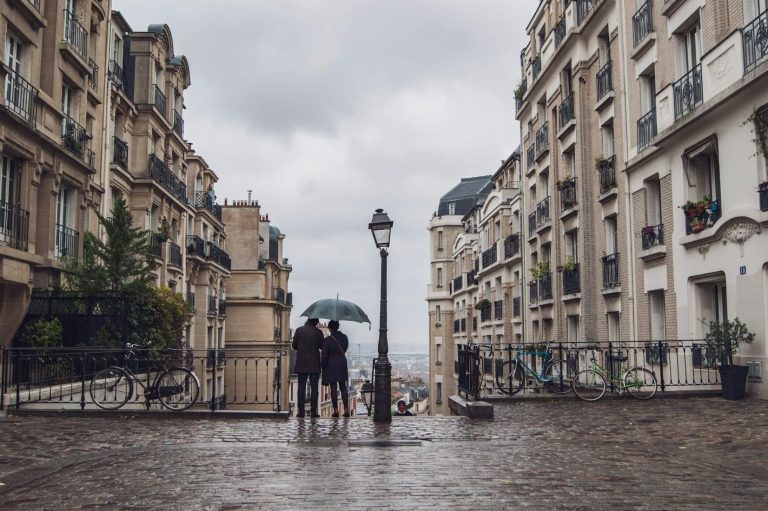
A walk through Montmartre can begin at Place des Abbesses, where the neighbourhood immediately reveals its unique charm. Just a few steps away, the “I Love You Wall” (mur des “Je t’aime”) in the Square Jehan Rictus offers an original fresco written in hundreds of languages — a poetic and romantic stop, perfect for a memorable photo.
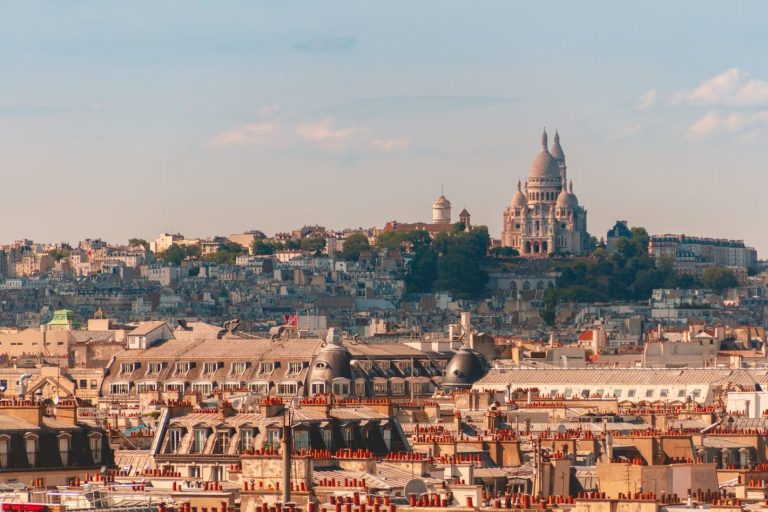
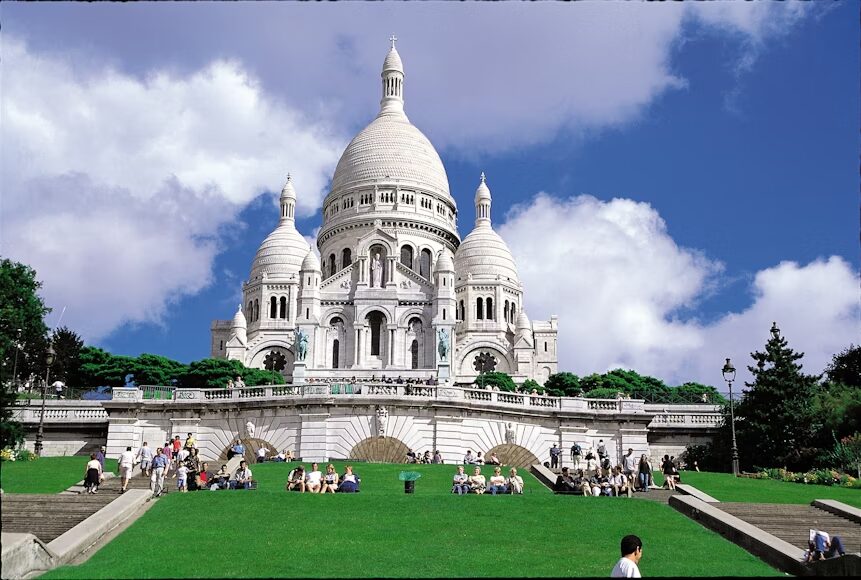
Winding up through the typical cobbled streets of Montmartre, you gradually reach Place du Tertre, the lively heart of Montmartre. Here, artists and painters in Montmartre display their work in a picturesque setting that captures the district’s bohemian spirit of Paris. After this vibrant stop, the ascent continues towards the impressive Sacré-Cœur Basilica, perched at the top of the hill. Its forecourt offers a stunning panoramic view over Paris, rewarding the gentle climb up to the dome. Entry to the basilica is free, making it an unmissable landmark in Paris.
On the way back down, you can take Rue Lepic, where a pause at Café des 2 Moulins immerses you in a cinematic atmosphere. The route then continues past the exterior of the Moulin de la Galette and the charming La Maison Rose, two highly photogenic spots that embody old Montmartre charm.
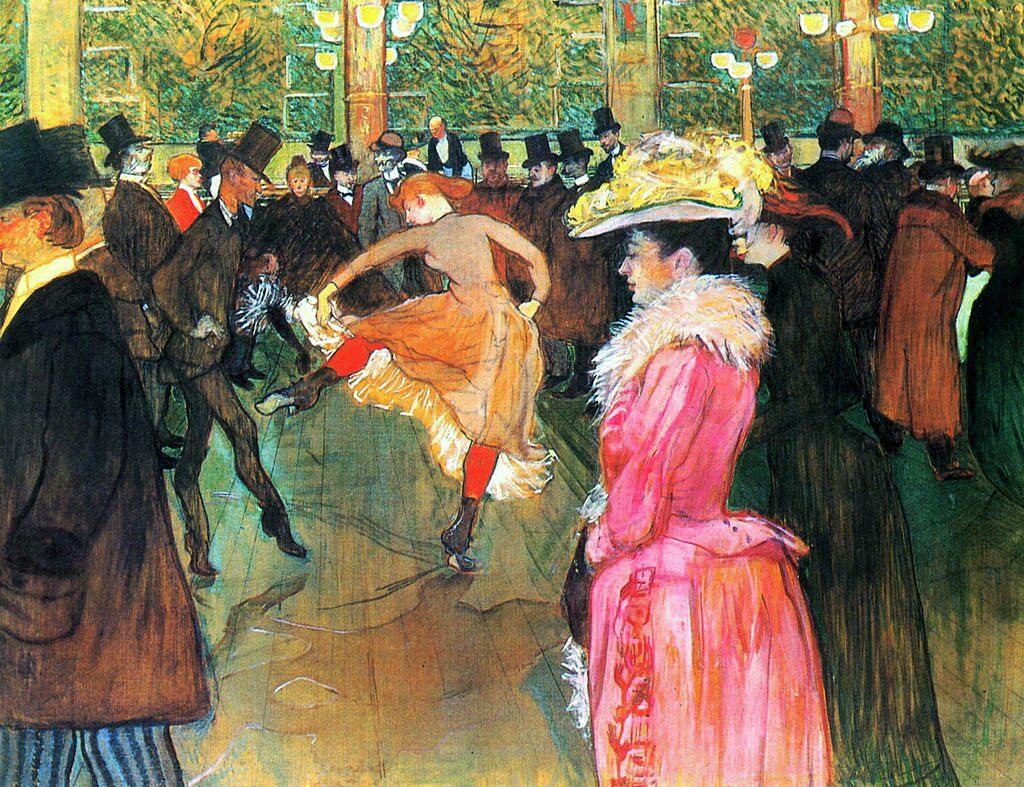
To end the day, after exploring Montmartre on foot, why not stop by the Moulin Rouge? Located at Place Blanche, this iconic Paris cabaret opens its doors every evening and draws you into the vibrant spirit of Parisian nightlife. The Féerie revue, the Moulin Rouge show, is a dazzling whirlwind of sequins, feathers and spectacular sets.
The Latin Quarter — Paris’s intellectual heart
A walk through the Latin Quarter in Paris can begin at Place Saint-Michel, in front of the Fontaine Saint-Michel, an ideal starting point to immerse yourself in the lively atmosphere of the Left Bank of Paris. A little further east, Rue de la Huchette unfolds — a small, bustling street lined with restaurants in Paris and cafés, perfect for a coffee break or a quick treat before continuing your stroll.
You then make your way along Boulevard Saint-Michel towards the Jardin du Luxembourg. As soon as you catch sight of its flowerbeds and shaded pathways, the atmosphere becomes noticeably calmer: it’s the perfect place to sit for a while, relax, or enjoy an impromptu picnic in the Jardin du Luxembourg.
After this break, head up towards the Panthéon, an imposing neoclassical monument where some of France’s most notable figures are laid to rest. The descent towards the Sorbonne University and the Square Samuel-Paty brings a quieter mood, with a pleasant green space at the heart of the university — a studious breath of fresh air in the middle of the city. Continuing southeast, you’ll come across typical narrow streets such as Rue Champollion, known for its art-house cinemas in Paris. The walk then takes on a more cultural dimension, before leading you to Place de la Contrescarpe and Rue Mouffetard, one of the oldest and most picturesque streets in the neighbourhood, lively with shops, markets and charming cafés.
To end on a softer note, let yourself wander through the cobbled streets around Rue Saint-Séverin, or simply follow your mood. This is where you truly feel the student atmosphere of the Latin Quarter, its literary heritage, and its historic spirit in Paris. This walk also lets you discover some of the best neighbourhoods in Paris to explore on foot.
Must-do walking itineraries in Paris
From Notre-Dame to the Eiffel Tower — a classic historical route
The walk begins on the forecourt of Cathédrale Notre-Dame de Paris, where the cathedral’s silhouette sets the tone, and the lively quays of the Seine River Banks establish the rhythm of a timeless stroll along the Seine. Following the pedestrian riverbanks westwards, you’re carried along by the atmosphere of the quays all the way to Pont des Arts — an elegant pedestrian bridge offering beautiful views over the Seine — and the traditional bookstalls of the Bouquinistes of Paris, which add a literary touch, a romantic atmosphere, and a Seine riverside experience to the route.
The walk continues to the Musée d’Orsay, a former railway station turned museum, where a photo stop in front of a major Paris landmark feels almost inevitable. You then resume your journey along the riverbanks, crossing Pont Alexandre III — one of Paris’s most ornate bridges, adorned with sculptures and gilded details — before gradually entering the 7th arrondissement.
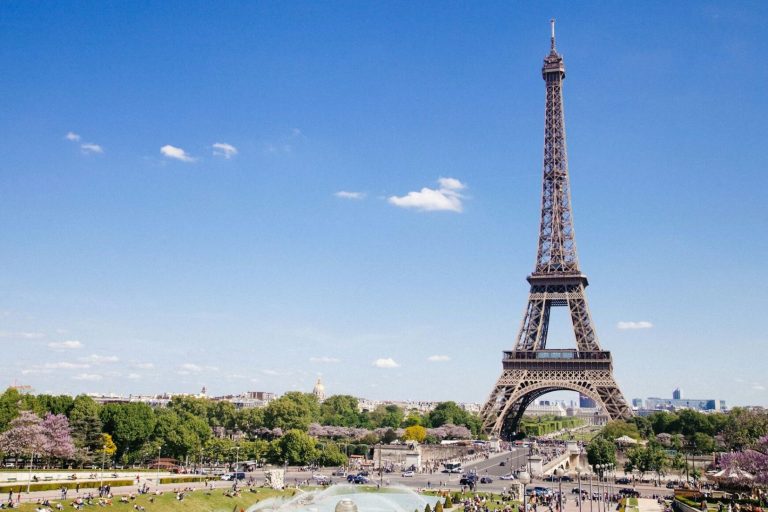
Further along the Seine, the scenery becomes even more striking: the Hôtel des Invalides comes into view, surrounded by historic buildings lining the riverbanks. And as if the city were guiding your steps, the Eiffel Tower slowly appears in the distance, drawing closer with every stride — a progressive reveal of the Eiffel Tower and a signature Paris skyline moment.
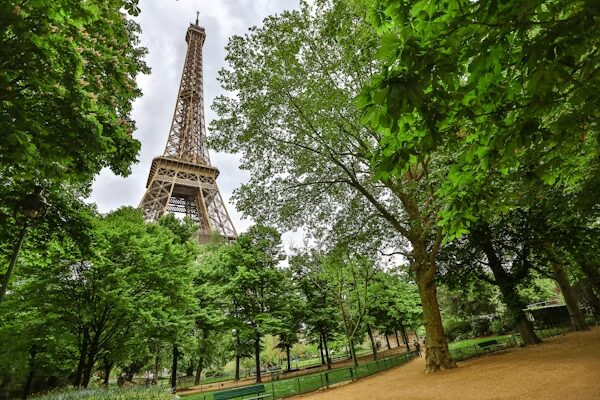
To reach it, simply cross the Seine via Pont d’Iéna, or continue down to the Passerelle Debilly, a pedestrian bridge leading directly to the Champ-de-Mars gardens — a scenic walking route in Paris and a direct approach to the Eiffel Tower.
The walk ends on the lawns of the Champ de Mars. The sight of the Eiffel Tower rising above the Paris skyline brings this classic stroll to a perfect close — an essential Paris walking itinerary, ideal for a one-day visit of Paris or for discovering the most beautiful street in Paris along the Seine.
A stroll along the Canal Saint-Martin
The Canal Saint-Martin is known as one of Paris’s most charming and vibrant areas, where you instantly feel a relaxed atmosphere, an intimate Parisian ambiance. The walk begins along the Quai de Valmy and Quai de Jemmapes, lined with chestnut trees reflected in the water. Between moored boats, swing bridges and historic locks, the canal unfolds its distinctly Parisian scenery, inviting you to slow down and take in the rhythm of everyday life in Paris, a slow travel experience along the canal.
As you continue along the banks, the atmosphere becomes livelier: trendy cafés, welcoming terraces and independent boutiques in Paris follow one another, offering plenty of inviting stops along the way. The neighbourhood’s bohemian spirit of Canal Saint-Martin reveals itself in every detail, from shopfronts to the laughter spilling out onto the terraces, creating a light and easy-going stroll in Paris.
Depending on your mood, you can extend the walk east or west. Towards Place de la République, the pace becomes a more urban and energetic Paris atmosphere; heading north, the Bassin de la Villette offers a broader, more open perspective of the canal. Between these sections, side streets such as Rue de la Grange aux Belles and Rue Beaurepaire add a more intimate touch, with their art galleries in Paris, concept stores, bookshops, and creative cafés.
To end the walk on a softer note, the nearby Jardin Villemin offers a peaceful green escape, perfect for sitting on the grass or enjoying an impromptu picnic. This waterside stroll in Paris, full of light, colour and calm, is one of the most romantic walks in Paris, a perfect way to experience the city’s signature Paris atmosphere.
When is the best time of year to explore Paris on foot?
Exploring Paris on foot in spring and summer
In spring and summer, Paris is best discovered through its green spaces in Paris, where locals and visitors come to walk, relax and enjoy the sunshine in Paris. You can begin your stroll in the Jardin des Tuileries, between the Louvre Museum and Place de la Concorde, before continuing on to the Jardin du Luxembourg, with its lawns, fountains and flower-lined pathways.
For a more natural atmosphere in Paris, Parc des Buttes-Chaumont offers hills, a lake and bridges, making it perfect for a peaceful walk in Paris or a picnic in Paris. Further along, the Jardin des Plantes combines botanical diversity with shaded paths, ideal for a long stroll under the trees.
If you’re looking for a change of scenery in Paris, Parc Clichy-Batignolles – Martin Luther King in the 17th arrondissement of Paris offers a modern park landscape to explore on foot, while Parc Montsouris invites you to wander around its lake and century-old trees. For a more intimate break in Paris, Square du Vert-Galant, at the tip of Île de la Cité, is a small secluded haven facing the Seine.
La Petite Ceinture, a converted section of the former railway line, offers an unusual green walk in Paris where nature has reclaimed the space. Finally, more distant parks such as Bois de Vincennes or Parc André-Citroën complete this selection of places to discover on foot in Paris in the sunshine.
These walks through Paris’s parks are a simple and enjoyable way to experience the city for free — a selection of free places to visit in Paris, blending calm, romance in Paris, and bucolic atmospheres in Paris.
Exploring Paris on foot in autumn and winter
In autumn, Paris transforms into a festival of warm colours, making it the perfect season for walking in Paris and enjoying the city. The Jardin du Luxembourg and the Jardin des Tuileries become living paintings in Paris, where tree-lined paths turn golden and russet, and fallen leaves crunch underfoot. Parc des Buttes-Chaumont, with its hills, lake and bridges, takes on a more dramatic atmosphere, enhanced by the autumn colours reflected on the water.
As you continue your walk, the banks of the Seine in Paris — particularly around Île Saint-Louis and Pont Alexandre III — become especially striking, with seasonal foliage in Paris shifting colour and open views across the city. Even quieter spots, such as the Père-Lachaise Cemetery or the Canal Saint-Martin, become highly photogenic autumn spots in Paris, when leaves cover the ground, giving Paris a postcard-like charm in autumn.
When winter in Paris arrives and temperatures drop, Paris lights up from late November onwards. Christmas window displays in Paris in the department stores, such as Galeries Lafayette, Printemps and Le Bon Marché, turn into enchanting festive scenes, while the streets fill with a warm festive atmosphere in Paris. Walking through the city takes on a new kind of magic, between illuminated Christmas decorations, the scent of roasted chestnuts, and a sense of winter celebration in Paris — a truly unique way to experience Paris in winter.
OTHER NEWS

Moulin Rouge® x Doudou & Compagnie: where the Féerie meets softness
Paris in July: what to do when summer brings the city to life?
Paris in August: the city never really slows down

What to do in Paris for a perfect girls’ night?
How to make the most of Paris’s Fête de la Musique ?