


WHAT IS THE HISTORY OF FRENCH CANCAN DANCERS?
The French Cancan, more than just a dance, has been a true symbol of freedom and boldness since its beginnings in the 19th century. Born in the popular dance halls of Paris, this lively performance has always been carried by passionate women who combined energy, technique, and expressiveness to captivate audiences. From its first improvised figures to the choreographic precision of today, the French Cancan has stood the test of time while preserving its rebellious and festive spirit. This article invites you to explore the fascinating history of French Cancan dancers, their iconic personalities, their role in women’s emancipation, and the contemporary vitality of this emblematic dance.
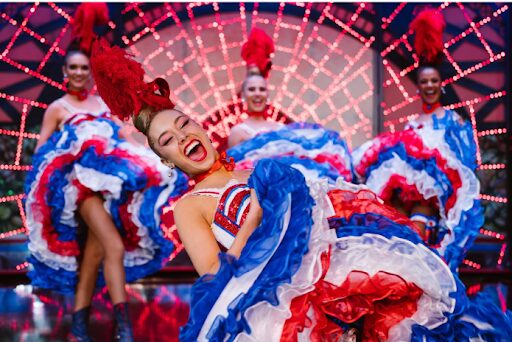
French Cancan dancers, cancanneuses… What are we really talking about?
In its early days, the French Cancan bore little resemblance to the discipline we know today. Born in the heart of 19th-century Parisian dance halls, it was first and foremost an outlet, a free, wild dance performed by daring women, the first cancanneuses. Without formal training, they improvised lively, acrobatic figures, from heel kicks to splits and flips, with a joyfully provocative energy.
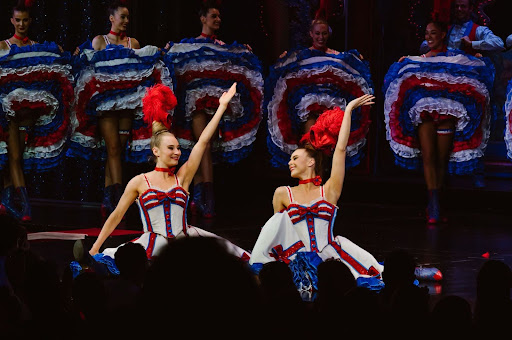
Over time, the dance became more structured. Choreographed, rehearsed, and stylized, it evolved into a full-fledged stage art. Yet what unites dancers of the past and present is the same ability to meet the demands of the French Cancan: strength, flexibility, endurance, as well as presence and precision. Iconic French Cancan figures such as the cabriole, leg-over-shoulder, and the split jump engage the entire body, from the core to the tips of the toes.
But the French Cancan is more than a physical performance. It calls for a rebellious spirit, a sense of rhythm, and expressiveness that bring the stage to life. Mischievous glances, confident smiles, and sweeping gestures are an integral part of the choreography. They convey collective energy, contagious joy, and sometimes a hint of impudence.
This spirit is also reflected in the costumes, which have become inseparable from the dance. Ruffled skirts, bloomers, fitted corsets, feathers — these spectacular outfits extend the movement and enhance the festive and visual impact of every stage performance.
Who are the most famous French Cancan dancers?
The French Cancan has produced remarkable female figures whose names and styles still resonate far beyond the Parisian stage. Each, in her own way, embodied freedom, expressiveness, and rigor, shaping the history of this dance.
- Louise Weber, known as La Goulue, is perhaps the most famous. From 1889 to 1895, she lit up the stage of the Moulin Rouge with a flamboyant personality and a sharp sense of provocation. Her gestures, confidence, and humor earned her the title of the “Queen of the Cancan”. She became one of the iconic figures of the Belle Époque, immortalized by Toulouse-Lautrec, of whom she was a muse.
- Jane Avril, on the other hand, developed a very personal style: nervous, precise, almost stylized. Refined and independent, she challenged the rules in her own way, notably as the only dancer allowed to wear colored undergarments on stage. Often mistakenly called “Jeanne la Folle”, she left a lasting impression through her singular elegance and the inner strength visible behind her controlled movements.
- Marie Blanchard, known as Nini Pattes-en-l’air, was both a great performer and a transmitter of knowledge. A recognized dancer, she is said to have been among the first to teach iconic French Cancan figures, such as leg lifts and splits, to young women she trained in a famous Montmartre cabaret. This early initiative was quickly stopped by the authorities of the time.
- Lucienne Beuze, nicknamed Grille d’Égout, played a quieter but structuring role. A former teacher turned choreographer, she reportedly helped train La Goulue alongside Céleste Mogador. Little is known about her life, but her name remains associated with the emergence of the French Cancan as a choreographed discipline.
What role did French Cancan dancers play in women’s emancipation?
In the 19th century, the emergence of the French Cancan took place in a context where women were seeking to assert themselves in a highly structured society. Faced with spaces reserved for men at the balls, where they sometimes danced alone, women gradually claimed their right to freedom of movement and expression on stage.
The cry of the French Cancan, which became iconic, embodies this desire for self-assertion and a break with traditional norms. More than a simple shout, it is a sonic manifesto, a mark of independence that conveys the joy and daring of these dancers.
They also played a crucial role in affirming the female body in public spaces, fully embracing their presence on stage and using movement and exposure as a form of artistic expression and protest. This assertion extended to the costumes of the dancers, whose colorful skirts, lace, and stockings revealed in the whirl of steps contributed to the theatricalization of transgression and freedom.
This physical expression was often accompanied by financial independence for many dancers, who leveraged their careers to gain autonomy in a society where women largely depended on men.
Beyond their personal paths, their engagement in teaching and choreography allowed them to pass on the values of the French Cancan, ensuring the longevity of a dance that carried the spirit of emancipation.
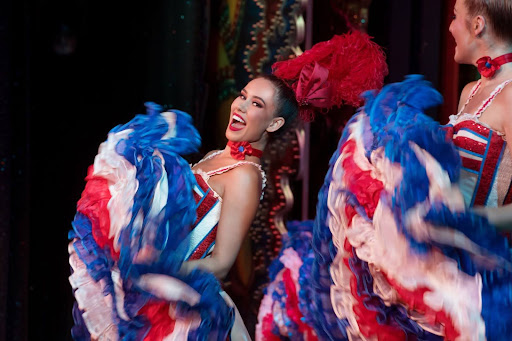
How has the French Cancan evolved, along with its dancers?
The French Cancan has evolved over time, transforming from a popular dance into a true artistic discipline, now embodied by professional female and male dancers. Trained in classical dance, jazz, and acrobatics, they master demanding techniques that honor this lively dance.
The Moulin Rouge remains a perfect example of this vitality. Every evening, with its revue Féérie, the dancers deliver a performance where the French Cancan takes center stage. When the first reinterpreted notes of Offenbach’s music sound, the audience immediately feels the energy and excitement that drive the dance, a moment cherished by all.
Far more than a tribute, the French Cancan remains an art in motion, carried forward by passionate performers who combine technical rigor with creativity. In this way, French Cancan dancers continue this legacy, constantly adapting it to contemporary expressions, keeping alive the magic of this unique dance.
Other news
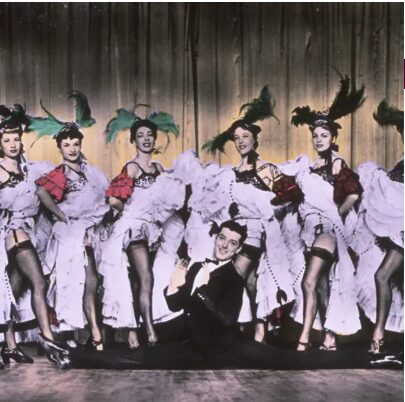
WHAT IS THE QUADRILLE AND HOW DO YOU DANCE IT?
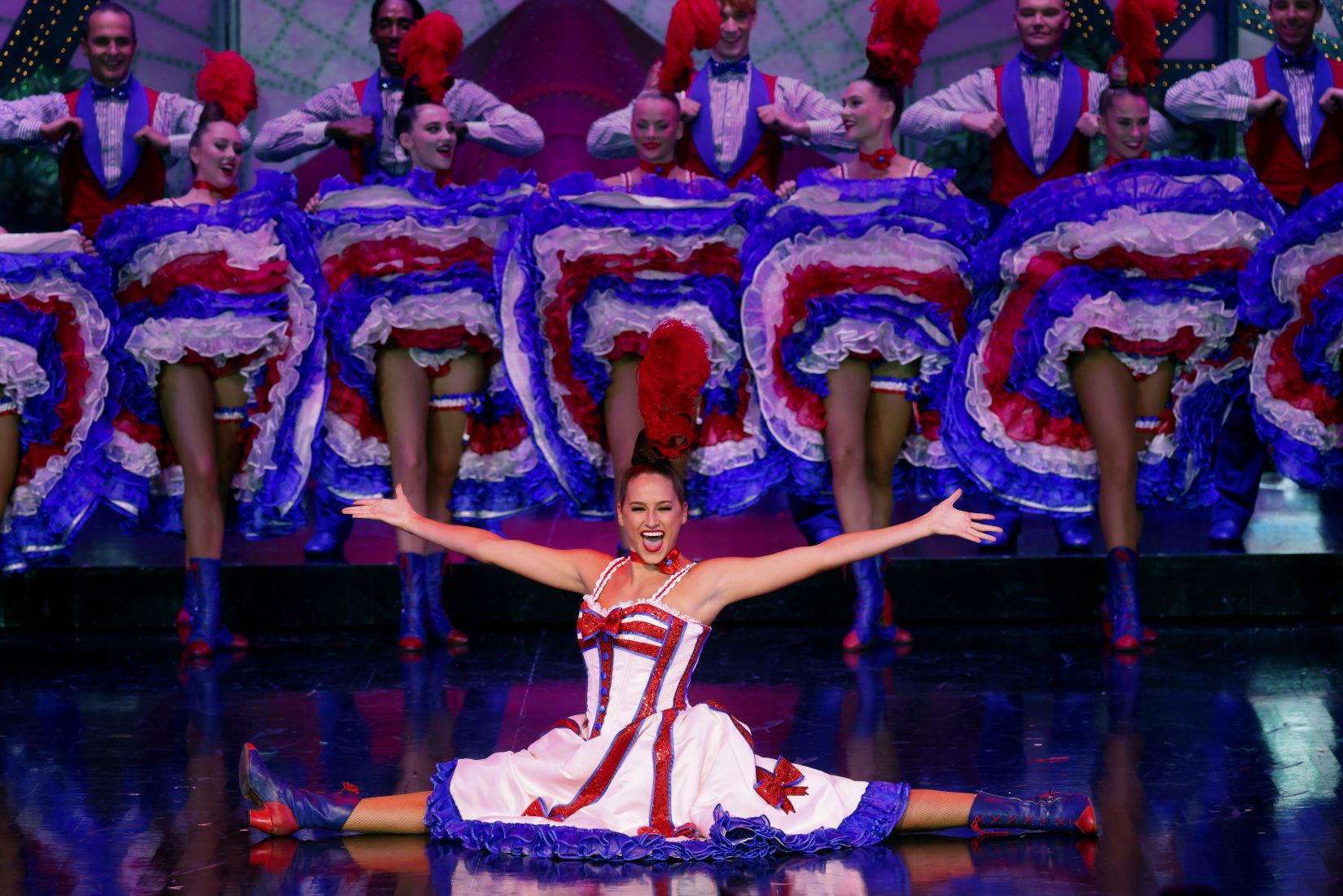
WHAT IS THE OFFICIAL STAGE COSTUME OF THE FRENCH CANCAN?
WHAT ARE THE SIGNATURE FIGURES OF THE FRENCH CANCAN?
Moulin Rouge! The Musical: Broadway’s Most Spectacular Night Out
THE BEST NEIGHBORHOODS IN PARIS TO EXPLORE: OUR SELECTION